Most people who have sat with Huachuma or Ayahuasca will tell you something shifted. Not just emotionally, not just psychologically, but in the body itself. Something biological. A settling. A clearing. Something that felt structural in a way that's hard to put into words.
New research is beginning to put words to it.
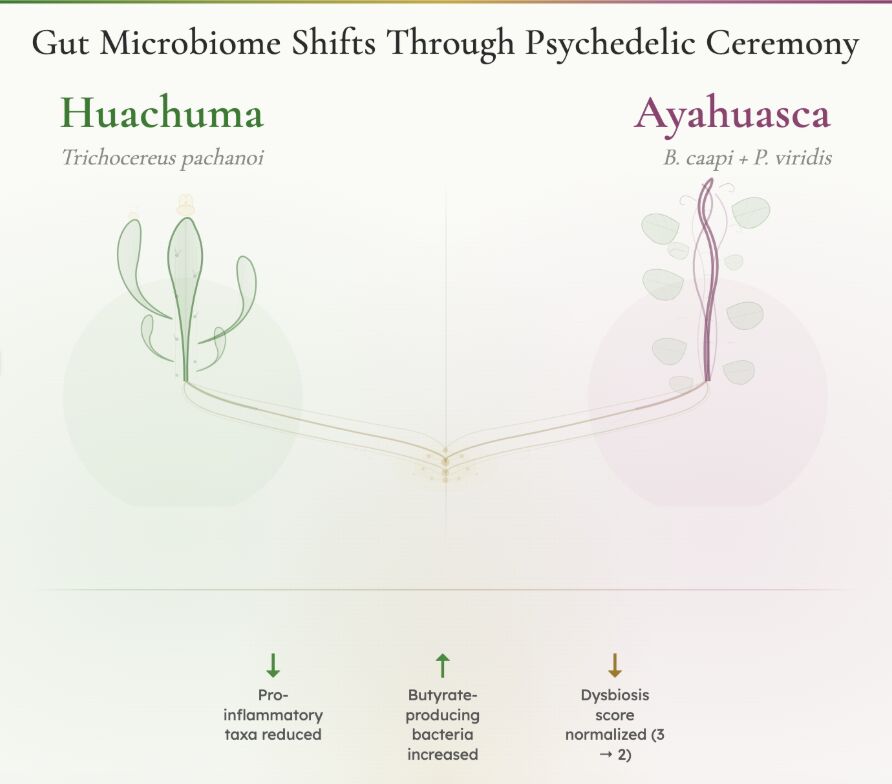
A case study published in December 2025 in the Journal of Restorative Medicine by researchers at the Helfgott Research Institute at the National University of Natural Medicine looked at something that most plant medicine research hasn't measured: what happens to the gut microbiome before and after Huachuma and Ayahuasca ceremonies.
The findings are early, and the study is small. It's a case study, not a clinical trial. But what it points toward is significant enough to change how practitioners, researchers, and participants think about what these medicines actually do.
What the Research Found
Participants in the study sat with both Huachuma (San Pedro) and Ayahuasca in ceremonial settings. Before and after each ceremony, researchers measured gut microbiome composition alongside psychological outcomes including depression scores and felt connectedness.
The psychological findings tracked with what existing research and personal experience have long suggested. Depression scores dropped substantially. Felt connectedness increased.
What was unexpected, and what makes this study worth paying close attention to, was what happened in the gut.
Following both ceremonies, pro-inflammatory gut bacteria decreased. Butyrate-producing bacteria, which play a key role in gut lining integrity and systemic anti-inflammatory signaling, increased. And dysbiosis scores, a measure of microbial imbalance, partially normalized, moving from a score of 3 toward 2.
Both medicines produced these shifts. Two medicines that anyone who has worked with them will tell you feel quite different from each other, one grounded and expansive, the other deep and confrontational, pointed the body toward the same biological direction. Reduced inflammation, across the board.
Why This Matters Beyond the Ceremony
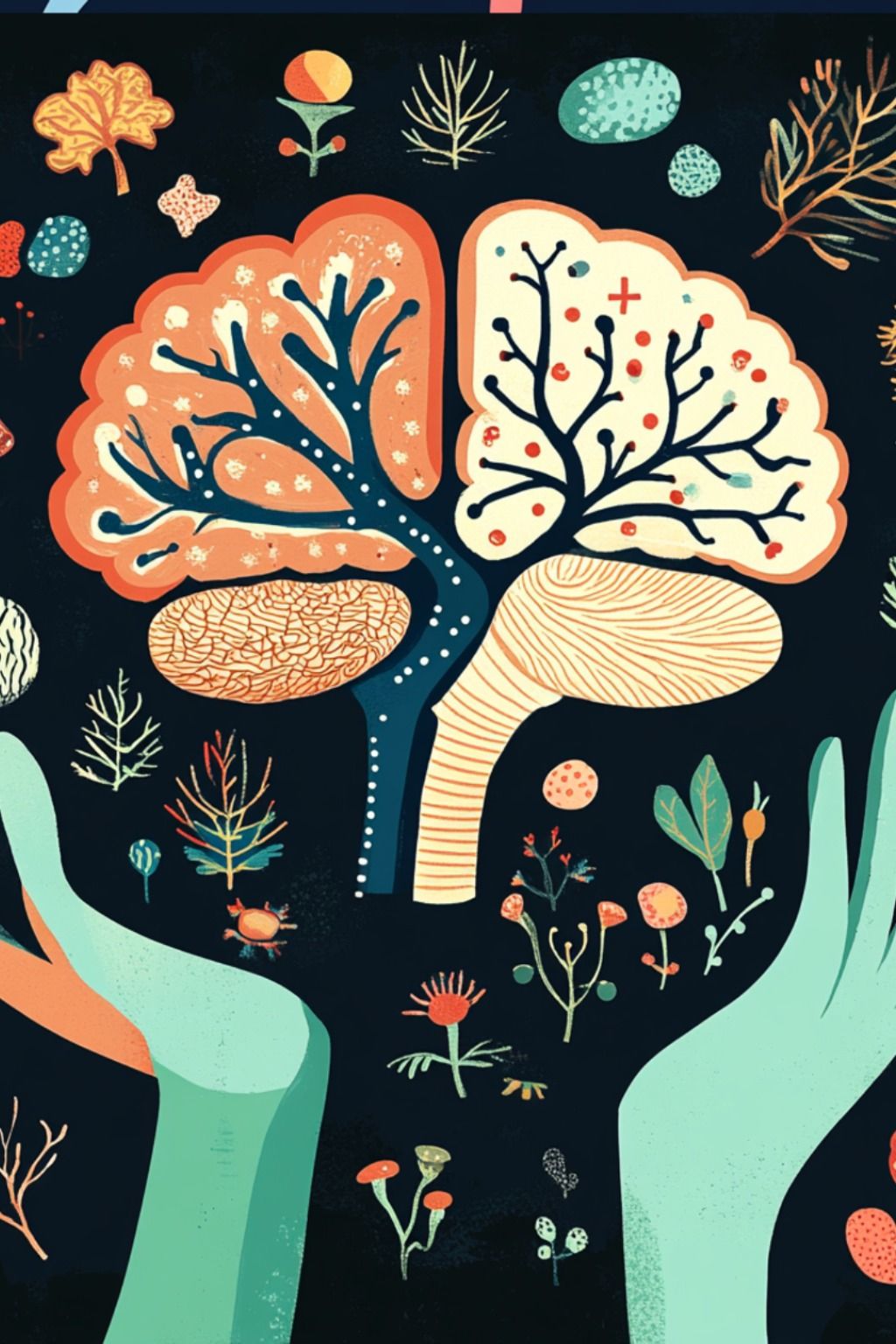
This study matters because it suggests the effects of plant medicine ceremony don't end in the brain. They may extend into the gut, and the two may be reinforcing each other in ways we're only beginning to understand.
We know psychedelics produce lasting change in the brain through neuroplasticity, dendritic spine growth, and shifts in neural connectivity. What this research adds is a parallel story happening below the stomach. The gut isn't just processing food. It's in constant conversation with the brain through the enteric nervous system, influencing mood, threat perception, inflammatory tone, and the capacity for genuine connection. Most people who have sat in ceremony have felt that conversation happening, even if they couldn't name it. The body settling. The chest loosening. Something releasing that wasn't psychological.
When the microbial landscape shifts, the whole system responds. And that may go a long way toward explaining something that has always been hard to articulate after ceremony: the feeling that whatever changed, it changed all the way through.
What This Means for How We Think About Preparation
If microbial shifts are part of what makes ceremony transformative, then dietary preparation isn't just spiritual practice. It's also, potentially, microbiome preparation. And that changes how seriously we should take it.
Most protocols include dietary guidance: reducing alcohol and sugar, eating simply, avoiding certain foods in the days before ceremony. This has always been framed as energetic or spiritual preparation. And it is. But it may also be creating conditions in the gut that influence how deeply the medicine lands and how long its effects hold. The two explanations aren't in conflict. They may be describing the same thing from different angles.
At Ananda Lodge, preparation is one of the things we take most seriously. Every guest begins working with our team weeks before they arrive, not as a formality, but because we believe the container you build before ceremony shapes everything that happens inside it. This research gives that belief a biological dimension we find both validating and humbling.
Two Medicines, One Direction
There is something worth sitting with in the fact that Huachuma and Ayahuasca, medicines with distinct lineages, distinct ceremonial containers, and experiences that feel fundamentally different from each other, both pointed the body toward the same biological outcome.
Huachuma, the grandfather cactus of the Andes, is known for its grounded, embodied, heart-opening quality. A long day in presence. Clarity arriving slowly and staying. In traditional Andean-Amazonian ceremony sequencing, Huachuma opens the heart center first, creating the conditions for what comes next.
Ayahuasca, held within the Shipibo tradition, moves differently: deeper into the layers that sit below conscious awareness, the patterns and imprints that understanding alone hasn't been able to reach. It goes into mind and shadow work from a heart that Huachuma has already softened. Then Huachuma returns to close the container, grounding everything that moved.
Different paths. The same reduction in inflammation. The same movement toward microbial balance. The same increase in felt connectedness.
This is not a coincidence. It suggests that whatever these medicines are doing at the level of consciousness, emotion, and spirit, they may also be doing something coherent at the level of biology. Something that the body registers as resolution.
Experiencing Both in One Container
Later this year, Ananda Lodge is offering something rare: the opportunity to work with both Ayahuasca and Huachuma in a single ceremonial journey, held in one of the most sacred landscapes these medicines have ever called home.
The Convergence is a 10-day Level II retreat in the Sacred Valley of Peru, August 13 to 22, 2026. One Despacho ceremony, two Huachuma ceremonies, and two Ayahuasca ceremonies, held alongside master medicine carriers from both the Amazonian and Andean lineages. Maximum 10 participants. This is the first time Ananda Lodge has brought together both traditions under one container, and it was designed specifically for people who have already walked with plant medicine and are ready for what synthesis-level work actually feels like.
The ceremony sequence follows ancient Andean-Amazonian logic. Huachuma opens the heart on Day 3. Ayahuasca goes deep on Days 4 and 5. Huachuma returns to anchor and ground on Day 7. The medicines work together across the arc of the retreat in a way that neither could do alone.
The Sacred Valley is not an arbitrary location. At 10,000 feet above sea level, with the Apus, the Incan energy grid, and a 100-foot waterfall as co-facilitators, sitting with these medicines on the land where they originate is a fundamentally different experience. The land is part of the container.
Ananda alumni receive a 10% discount: $4,765. Machu Picchu access requires booking by May 15. Payment plans are available.
What the research above suggests, that both medicines move the body in the same direction, that the biological and the spiritual may be telling the same story, feels particularly alive in a container where both traditions converge at once.
If you have sat with one of these medicines before and felt the pull toward something more intentional, more complete, this retreat was built for that pull.
Learn more about The Convergence in Peru →Frequently Asked Questions
What did the 2025 study on plant medicine and the gut microbiome find?
A December 2025 case study published in the Journal of Restorative Medicine found that both Huachuma and Ayahuasca ceremonies were associated with measurable shifts in the gut microbiome, including reductions in pro-inflammatory bacteria, increases in butyrate-producing bacteria, and partial normalization of dysbiosis scores. Participants also experienced significant drops in depression scores and increases in felt connectedness.
What is the gut-brain axis and why does it matter for plant medicine?
The gut-brain axis is the bidirectional communication system between the digestive system and the brain. The gut microbiome influences mood, inflammation, threat perception, and social behavior. When microbial balance shifts, it affects how the entire nervous system functions, which may help explain why plant medicine experiences feel biological as well as psychological.
Is this research definitive?
No. The 2025 study is a case study, meaning it is early and small in scale. It is not a clinical trial and does not establish cause and effect. It does, however, open an important line of inquiry and provides early evidence that deserves further investigation.
How are Huachuma and Ayahuasca different from each other?
Huachuma (San Pedro) is a cactus with roots in Andean tradition, known for producing a long, embodied, heart-centered experience focused on clarity and connection. Ayahuasca is a brew used in Amazonian traditions, particularly by the Shipibo, known for working at deeper layers of unconscious pattern and emotional imprint. They are distinct medicines with distinct ceremonial lineages, though this research suggests they may share certain biological effects.
What is The Convergence retreat?
The Convergence is a 10-day Level II plant medicine retreat in the Sacred Valley of Peru, offered by Ananda Lodge August 13 to 22, 2026. It includes one Despacho ceremony, two Huachuma ceremonies, and two Ayahuasca ceremonies held by master carriers from both the Andean and Amazonian lineages, in a container of maximum 10 participants at 10,000 feet elevation at The Source Peru. Prior plant medicine experience is required.