
In October, Science Advances published the largest dataset of its kind on psychedelic support: 25,419 calls and texts to Fireside Project's Psychedelic Support Line, answered by 220 trained peer supporters between April 2021 and February 2026.
What caught my attention is that this study is about ongoing support.
Most of what we know about psychedelics comes from two places: snapshots taken at festivals and the controlled conditions of clinical trials. The authors call the space between them "a vast and empirically vacant middle ground."
That middle ground is where we live at Ananda, in the ongoing support we provide in our specialty immersions, and even more precisely in The Empowered Path.
What the research found
Whether someone reached out during or after their experience predicted distress more than which substance they had taken. Within comparable kinds of calls, distress looked much the same across the major substances. The circumstances around the medicine told the researchers more than the medicine did.
A total of 43 interactions, 0.2%, were classified as reports of facilitator abuse. Substance data were available for 27 of them, and ayahuasca and psilocybin were each involved in seven.
It is a small number, the reports were not independently verified, and people who call a support line are not a picture of everyone who works with these medicines. The reports were also disproportionately linked to ceremonial settings and plant medicines. These are the medicines we carry. We would rather name that than look past it.
What I know from my own body
I have sat in containers that were not emotionally or psychologically safe. My body responded by constricting and staying in an activated state, which led to harm.
Because I was in a state of terror, I could not ask for help. Because the group was so large, and the people holding it did not know me and were not attuned to my nervous system, they could not track what was happening to offer support and repair.
If you have been in a container that could not hold you, what your body did made sense. Constricting, going quiet, being unable to ask for help: these are ways a nervous system protects itself. Coming back to this work, if you choose to, can begin slowly, with people who take the time to know you first.
That experience shaped how we built Ananda. Preparation creates safety. Safety creates connection and depth. Depth creates profundity, which can initiate disorientation and a lack of direction or clarity moving forward. Big work requires integration.
We are aiming for depth and precision in our work, and each part is as important as the ceremony itself.
Preparation begins with listening
Each preparation session is unique to the guest. Our intake goes all the way back to a person's birth and then through each phase of their life. Often we hear clues that point to adaptive ways of being that are no longer supportive of physical, mental, or emotional well-being.
We are deep listeners at Ananda. We hold space for what is ready to surface, and it is never rushed. We are also mirrors, reflecting back a person's choice of words and how those words create a map of their reality.
We model safety through our way of being: present, listening, attuning, and never pressuring anyone to move faster than they are ready. We are building trust, which builds safety, which builds capacity to hold more in life.
Along the way we may offer somatic resources that support the nervous system, or send a personal follow up email that holds a guest accountable to a commitment they made.
What trauma-informed actually means
Trauma-informed has become a buzzword. So many people think of it as a black and white checkbox. Unfortunately it has also become a divisive weapon and a box for blame, rather than an orientation to someone's lived experience.
Trauma-informed is a philosophy and a way of being. It requires therapeutic presence, and a way of listening that is oriented to someone's lived experience. It means I honor your lived experience, and I honor that each person holds their own healing wisdom. It honors your sovereignty. It does not treat you as a victim.
Trauma-informed means I can listen for how events in someone's life have created adaptive ways of being, coping mechanisms that helped them find safety, security, and connection. Learn more about our trauma-informed approach.
Consent and the power at the altar
Trauma-informed work also prioritizes informed consent. Before ceremony, we share how it will go, how you may experience the medicine, and the role of each guardian.
This removes the power dynamics usually at play in medicine ceremonies, where the individuals at the altar can put themselves in a position of power. Through education we create informed consent: what you agree to and what you do not, always honoring choice and agency within the safety boundaries of our work.
Consent is personal, and we always ask before offering touch. If a guest would like to hold our hand, we are here. Our work is to build self-resourcing and the tools for regulation, so we also teach ways to hold yourself.
That is where the real magic lies: self-empowerment, safety with self, and the reassurance that you can hold and care for yourself.
Integration is a weaving
Integration is an ongoing process. For some it takes months, even years. It is like weaving a kené, the Shipibo textile. We are weaving and re-weaving the story continuously.
Integration requires an active participant: someone paying attention, listening, and observing, tracking the feedback given internally and externally. We are always in communication, within ourselves and with the environment around us.
Integration invites devotion to a practice: making space to listen, holding yourself accountable, asking for help, and practicing the medicine of grace as we relearn new ways of being and choose more helpful patterns. Learn more about our integration support.
How we hold the container
At Ananda, the same guardians hold preparation, ceremony and integration. In The Empowered Path, that container unfolds over sixteen weeks.
Attune (four weeks before the immersion)
One-on-one preparation, a full life-history intake, and somatic resources that build capacity before you arrive.
Immerse (eight days onsite)
Ceremony in a small group, held by medicine carriers and guardians who already know your story.
Anchor (twelve weeks after the immersion)
Integration support as you return to daily life, weaving what surfaced into practice, choices and relationships.
Explore The Empowered Path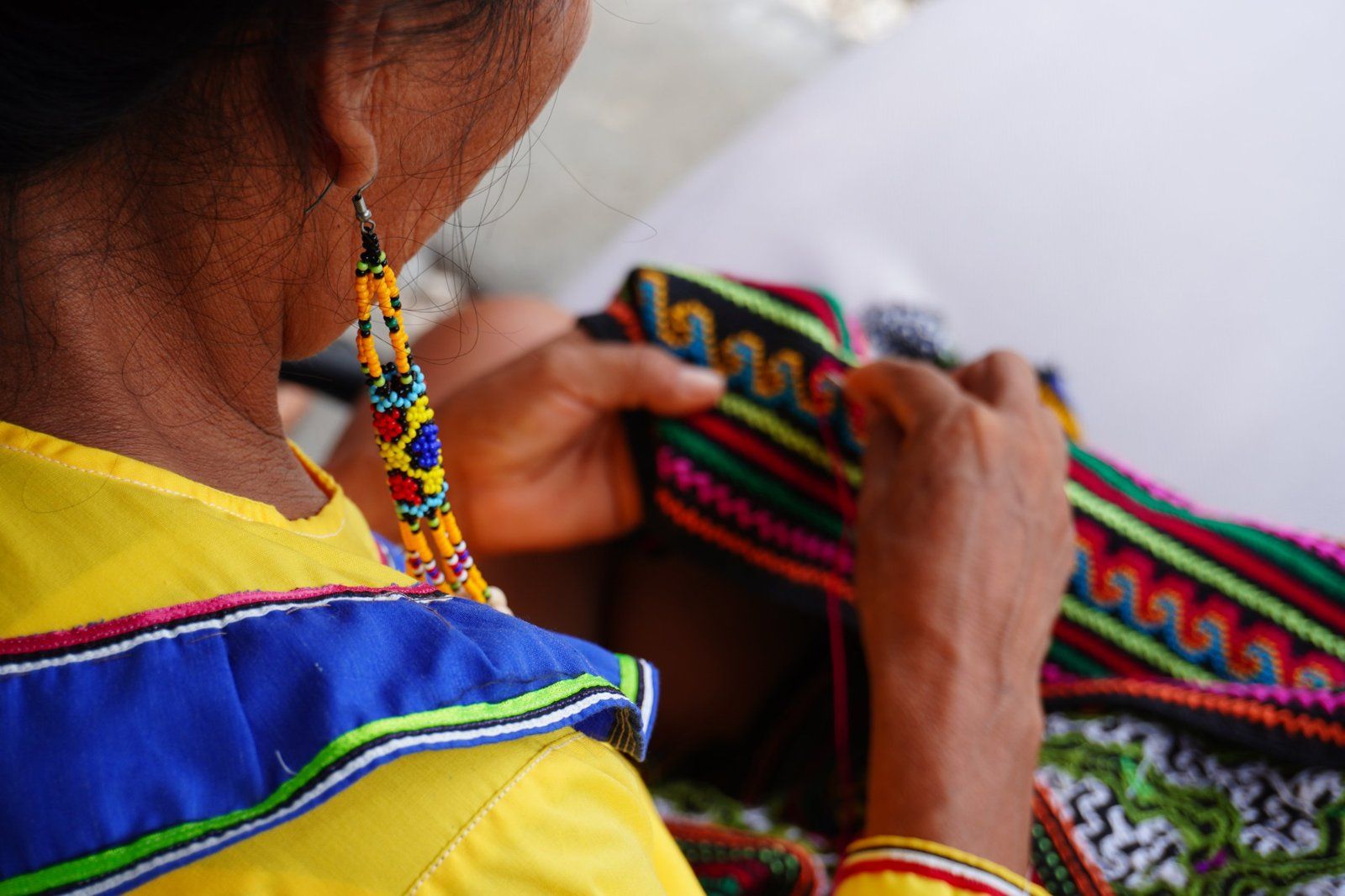
Questions worth asking
Before you begin anywhere, there are questions worth sitting with. We gathered the reflections we offer every guest into a free guide, Questions Worth Asking. You can download it HERE.
When you are choosing a center, these are worth asking too:
- Who will hold the space, and what is their lineage, training, and years of practice?
- How large is the group, and will the people holding it know you before ceremony?
- How is consent handled, including touch?
- Who supports you after you go home, and for how long?
Frequently Asked Questions
What does trauma-informed mean in plant medicine work?
It is an orientation, not a checklist. It means listening to a person's lived experience, honoring their sovereignty and inner wisdom, and never pressuring them to move faster than they are ready.
Why does preparation matter before a plant medicine retreat?
Preparation creates safety, and safety allows depth. It builds trust with the people holding the space and gives your nervous system resources before ceremony begins.
What is integration after a plant medicine experience?
Integration is the ongoing process of weaving what surfaced in ceremony into daily life. For some it takes months or years, and it asks for active participation and practice.
What did the Fireside Project study find?
Across 25,419 support interactions, the circumstances of an experience predicted distress more than the substance taken. The authors note callers are self-selected and not representative of all users.
What does an immersion at Ananda include?
Preparation, ceremony and integration held by the same guardians, in small groups. The Empowered Path holds all three over sixteen weeks: Attune, Immerse, Anchor.
The medicine meets us where we meet it
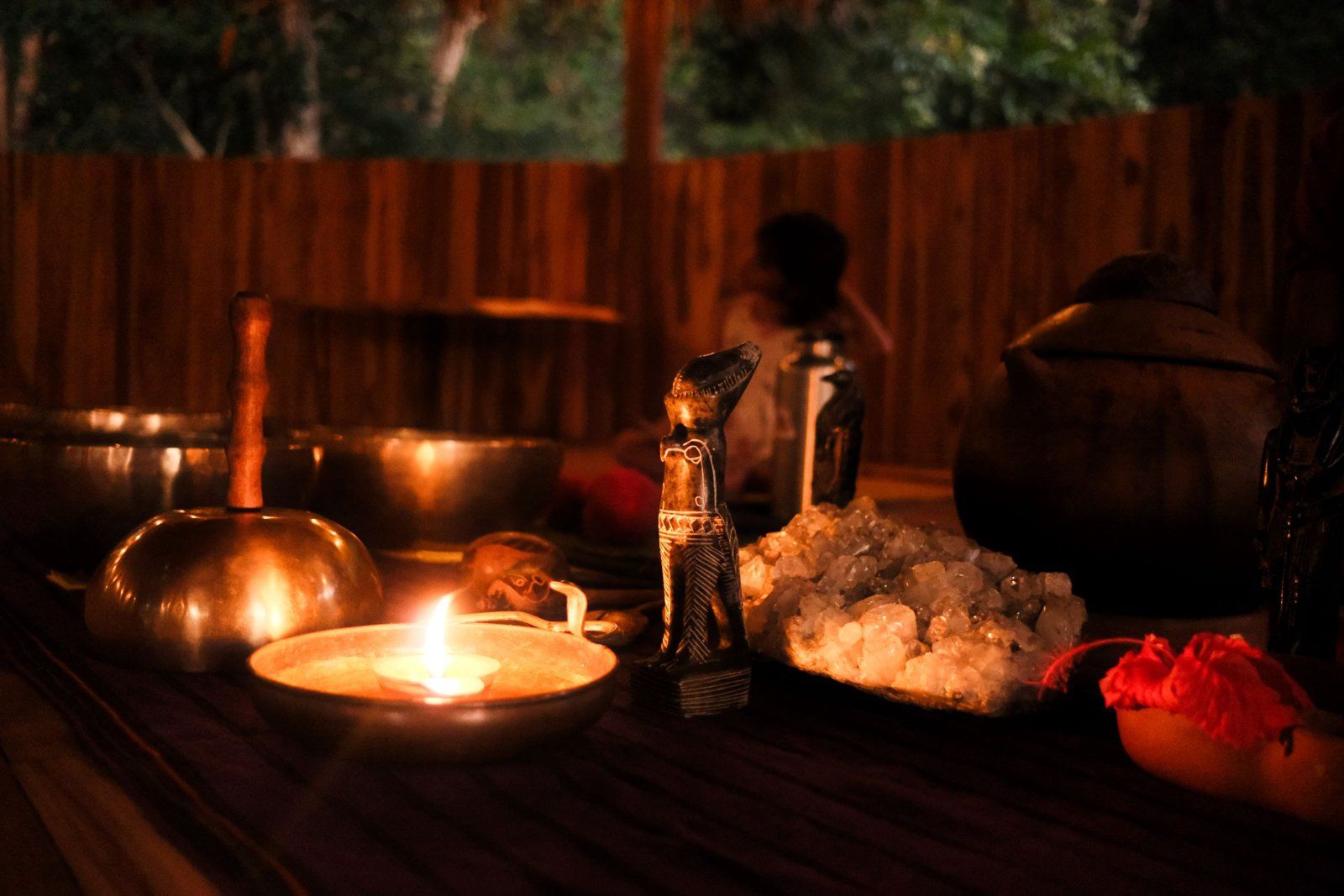
These medicines are tools of knowledge and master teachers. They will meet us where we meet them.
If we show up fully devoted and committed, they will do the same. They are not here to do the work for us, and they honor a student ready to learn.
The container is how we honor that.
If something here speaks to you, we invite you to begin with a conversation. We will listen to where you are, and you can feel into whether the way we work resonates with you. You can book a time with us HERE.
With Care,
Kimberly
Co-founder, Ananda Lodge