
The Weight of Service
I didn't have a single call that broke me. There was no moment I could point to and say, that's when it happened. What did the damage was accumulation.
Years of overdoses, medical emergencies, violence, and human chaos layered on top of each other without ever fully clearing. My nervous system stayed in a near-constant state of readiness, and I treated that as normal because that's what the job rewards.
Like most firefighters, I filled every open space with work. Overtime, ambulance shifts and back-to-back rotations kept me in operational mode for weeks at a time. When I wasn't on duty, I had a young family, home renovation projects, and the pressure to be fully present without ever actually powering down. There was no real off-ramp. Hypervigilance became my baseline.
That tension didn't stop when I went home. It followed me into my sleep and into my relationships. Alcohol became the fastest way to turn the volume down. There were plenty of mornings I came off shift and took a few shots just to slow my body enough to be present with my kids and get some rest.
At work, most people didn't see any of this. I was the funny guy, the one who kept things light. At home, I was becoming increasingly distant: emotionally flat, numb, and unavailable in ways I didn't yet have language for.
A Call to Sacred Medicine
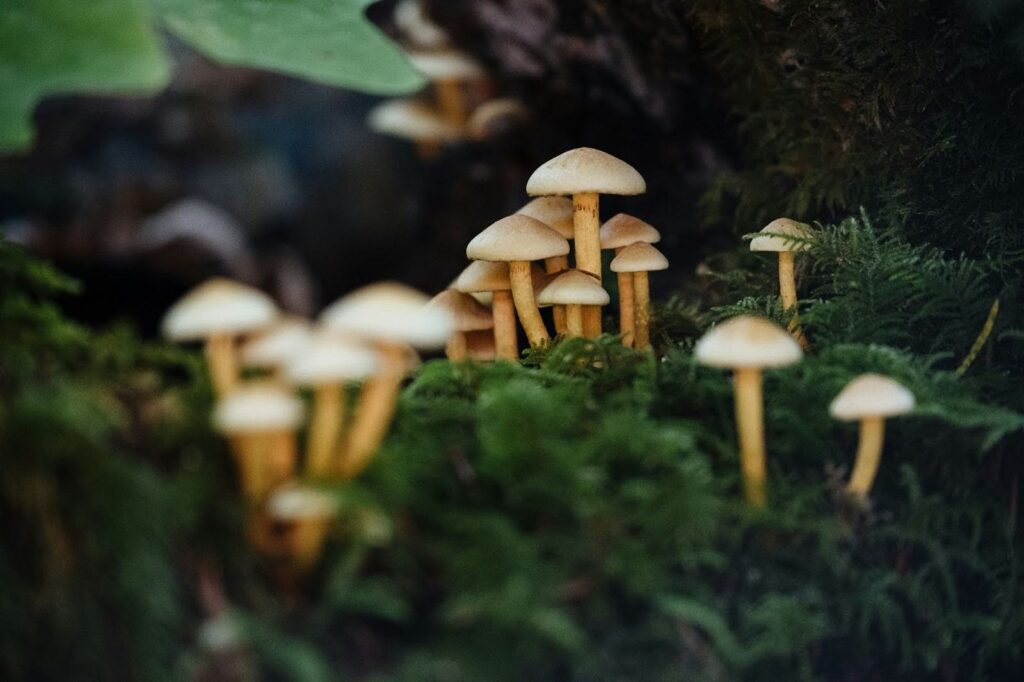
I had been interested in psychedelic therapy for years, but I avoided it because of stigma and legal risk. I wasn't willing to jeopardize my career. That changed after a prolonged period of nervous system collapse layered with an aggressive cancer diagnosis, the early stages of suicidal ideation, and a marriage that was beginning to unravel. Whatever was happening to me wasn't going to be solved by symptom management alone. I could feel that in my body even when I couldn't explain it.
With the support of a close friend who had extensive experience facilitating psilocybin sessions, I decided to move forward. The setting was ceremonial but simple and contained. I didn't come in with a scripted intention, just a clear desire to reconnect with myself, because I no longer felt like the person I had been before years of cumulative stress and trauma.
The experience itself wasn't visual or narrative-driven. There were no dramatic scenes or relived calls. What stood out was a sustained internal quiet and a sense of being back in contact with something steady inside me. For the first time in a long while, my nervous system wasn't scanning or bracing. It felt settled. That surprised me. I had forgotten what that baseline even felt like.
It didn't resolve everything in a single session, but it did something just as important: it showed me that the part of me that felt grounded, capable, and intact was still there. When I woke up the next morning, I noticed I felt like myself again, a familiar internal state I hadn't realized I'd lost.
Integration and Ongoing Work
In the weeks and months after my first psilocybin session, it became clear that it wasn't a panacea. There was no permanent elevation in mood. My emotional state gradually returned toward baseline. What remained, however, was access to myself. The experience created a reference point, a felt sense of internal stability that I could return to when things became dysregulated.
That made it different from anything I had tried before. Therapy and medication had focused on reducing symptoms. Psilocybin changed my relationship to them. Anxiety still showed up, but it no longer escalated into full panic attacks. I could feel the activation begin and stay present with it instead of being overwhelmed.
One of the most tangible changes was around substance use. Before, alcohol had been my primary way of calming my nervous system. Afterward, I no longer needed to numb emotional or physiological discomfort to get through the day. I became more capable of tolerating difficult states without immediately trying to make them disappear.
That shift made it possible to start rebuilding. I became more willing to engage in therapy honestly, to sit with uncomfortable emotions, and to look directly at patterns I had been avoiding for years. The work was still there: grief, stress, identity shifts. But it felt workable. Instead of living in survival mode, I had a sense of agency.
The largest change was internal. My intuition and sense of self felt accessible again. I wasn't trying to return to who I had been before the job. I was learning how to move forward as someone more integrated.
Learn more about the power of integration →Why This Matters for First Responders
I didn't find psilocybin until about fifteen years into my career, after I had already spent years in a chronically dysregulated state. By then, the cumulative load on my nervous system had taken a real toll, and my career ended earlier than I had planned because my body simply couldn't absorb any more. I still think about how different that trajectory might have been if I had access to this kind of intervention earlier.
First responders are trained to perform under conditions that would overwhelm most people. We learn to suppress emotional reactions and stay operational. That works in the short term, but hypervigilance becomes the baseline. The body stays activated long after the call is over. Over time, that activation accumulates below conscious awareness in the autonomic nervous system.
Traditional mental health care often struggles to meet first responders where they are. Stigma, concerns about fitness for duty, chain-of-command visibility, and fear of professional consequences all limit how honest people feel they can be. Talk therapy and medication can help, but they often fail to address the physiological imprint of years of threat exposure.
What psilocybin offered me was access to that deeper layer. It allowed my nervous system to experience a different state, one where it was not braced for impact. From there, real integration work became possible. For a population that lives in constant readiness, that shift is not just psychological. It's biological.
Courage as the First Step
Today, I work with both active and retired first responders who are trying to stabilize and maintain their nervous systems through structured psilocybin work and integration. My goal is to remove confusion. Therapeutic psychedelic use is not the same as recreational drug use, and it deserves to be evaluated through a clinical and ethical lens.
Psilocybin didn't remove every difficulty in my life, but it did help me move through a period of suicidal ideation and regain enough internal stability to stay engaged with my family and my future. I'm here raising my four kids because of the path it opened.
Anyone considering this should understand that the session is only the beginning. The real work happens afterward. Used responsibly, it can provide a workable foundation for people who are serious about long-term change.